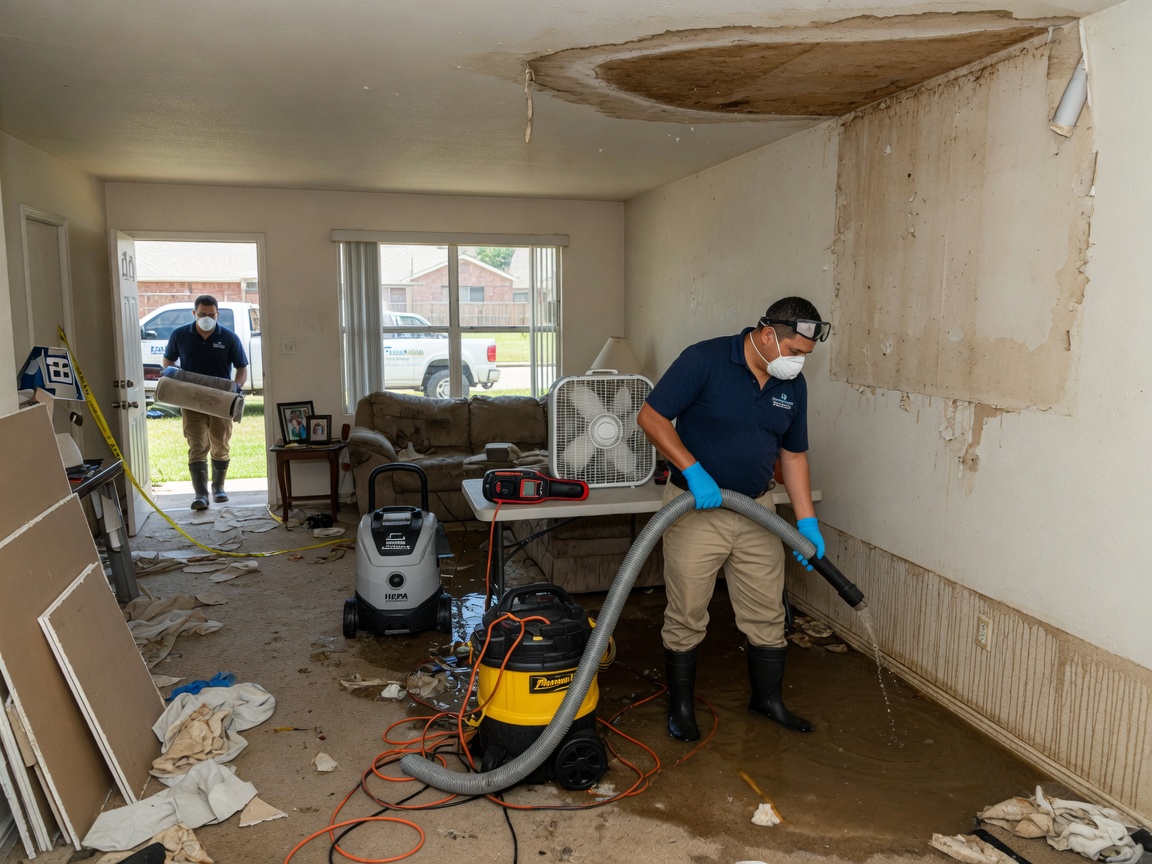
Seagoville sits south of central Dallas along US 175 with many single-story homes from the 1960s and 1970s on larger lots that back up to drainage ditches feeding Big Cedar Creek. Heavy spring rains often overwhelm older clay sewer lines and slab foundations here, sending water under floors and into crawl spaces. Water Damage Restoration Dallas Pros leaves the 305 North St. Paul Street shop and reaches Seagoville addresses within forty minutes, bringing truck-mounted extractors that handle the thick carpet pad common in these ranch-style houses.
Summer humidity in Dallas County keeps moisture trapped inside walls long after the rain stops, so crews open baseboards and run air movers pointed at the brick veneer that lines most Seagoville streets. Nearby Seagoville High School and the city park fields see the same pattern when storms back up storm drains along Kaufman Street. Technicians document every step so homeowners can show insurers exactly where water traveled from the roofline down through the attic insulation.
Winter freezes rarely last long, yet a single hard freeze can split exterior hose bibs on homes built before 1980. When that happens along quiet blocks near Seagoville Middle School, the team isolates the leak, pulls wet drywall, and treats the exposed studs before mold sets in the humid air.
Around Seagoville
We regularly work near:
- 📍Seagoville Park
- 📍Seagoville High School
- 📍Seagoville Public Library
- 📍Seagoville Middle School
- 📍Kaufman Street
Water Damage Restoration in Seagoville — Local Notes
- •Seagoville lots often slope toward rear ditches; crews place containment barriers along fence lines to keep runoff from re-entering neighboring slabs.
- •Many homes here still have original cast-iron drains that crack at the joints; extraction focuses on the laundry room and bathroom slabs first.
- •Thick Bermuda grass and clay soil slow ground drying after storms, so dehumidifiers stay on site longer than in newer subdivisions north of I-20.
- •Access via narrow driveways off Seagoville Road means smaller equipment trailers are used instead of full-size box trucks.