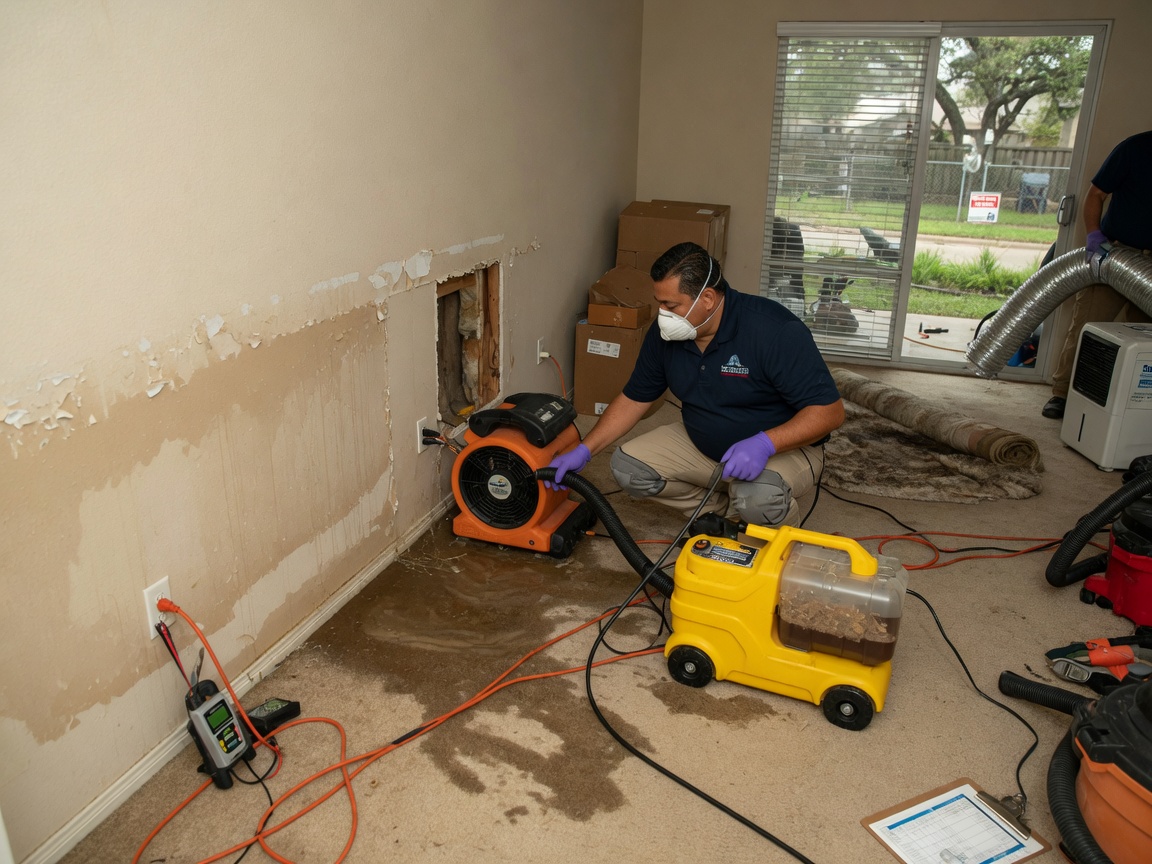
Dallas homes built before 1970 in East Dallas and Oak Lawn often have cast-iron or galvanized supply lines that corrode from decades of hard water and shifting clay soils. When a line bursts, water travels under pier-and-beam floors and saturates subfloors before reaching the slab. Restoration crews must pull baseboards, cut weep holes in drywall and run commercial dehumidifiers for five to seven days because the humid subtropical summers keep ambient moisture high enough to restart mold growth within 48 hours.
Reunion Tower and Klyde Warren Park sit on reclaimed land with high water tables, so commercial buildings there frequently experience slab leaks that push moisture into elevator pits and mechanical rooms. Technicians use moisture meters on concrete to map hidden saturation, then apply antimicrobial coatings before reinstalling finishes. Work in these structures must coordinate with building management to avoid shutting down HVAC that serves multiple tenants.
Flash flooding from heavy spring rains funnels water into low-lying streets around Deep Ellum and the Trinity River bottoms. Older brick warehouses converted to lofts have limestone foundations that wick moisture upward, requiring perimeter drainage checks and French-drain tie-ins during restoration. Crews document every step with photos because Dallas County flood-plain rules affect insurance claims on properties near the river.
North Dallas and Lake Highlands neighborhoods have post-1980 homes with slab-on-grade construction and polybutylene piping that failed in large numbers. When these lines leak under tile or hardwood, crews remove flooring in sections rather than entire rooms to limit dust migration into occupied spaces. Drying times shorten in winter because mild temperatures allow equipment to run without constant condensate issues.
Technician insight
In Dallas the thing that catches most people out with water damage restoration is how fast mold appears in summer humidity once a slab leak saturates the particleboard underlayment common in 1990s Lake Highlands homes; waiting even three days often turns a drying job into full floor replacement.
Burst supply line in Oak Lawn duplex
A galvanized line failed behind the kitchen wall of a 1960s pier-and-beam duplex. Water traveled under the subfloor into the adjacent unit. Crews extracted water, removed baseboards on both sides, ran drying equipment for six days and replaced the affected subfloor sections before reinstalling cabinets and flooring.
Water Damage Restoration Services We Offer
✓Emergency Water Extraction
Rapid removal of standing water from burst pipes, appliance leaks and storm intrusion using truck-mounted pumps before secondary damage spreads through Dallas homes.
✓Structural Drying and Dehumidification
Placement of air movers and dehumidifiers to pull moisture from walls, subfloors and insulation in humid Dallas summers, preventing mold in older East Dallas and Oak Lawn properties.
✓Sewage Cleanup and Sanitization
Containment, removal and EPA-registered disinfection of Category 3 water from backed-up drains or flooding near the Trinity River bottoms.
✓Carpet and Hardwood Floor Restoration
Salvage or replacement of water-damaged flooring in Uptown condos and Bishop Arts District bungalows, including pad removal and subfloor drying.
✓Drywall and Ceiling Repair
Cut-out of saturated drywall, installation of new sheets and texture matching after leaks from roof penetrations common in Lake Highlands and North Dallas homes.
✓Content Drying and Pack-Out
Removal, drying and storage of furniture, documents and belongings from affected rooms in Downtown Dallas high-rises before reconstruction begins.
Water Damage Restoration Cost in Dallas, TX
| Service | Typical Range | What Affects It |
|---|---|---|
| Initial inspection and moisture mapping | $0–$125 | Waived when restoration work is authorized |
| Category 1 water extraction and drying | $800–$2,200 | Clean water from supply lines in 500–1,200 sq ft |
| Category 3 sewage cleanup | $2,400–$4,800 | Includes containment, removal and sanitization |
| Hardwood floor drying or replacement | $1,500–$3,500 | Depends on species, finish and extent of cupping |
| Drywall removal and reinstall | $600–$1,800 | Per room, includes texture and paint match |
Ranges are typical for Dallas, TX and confirmed with an exact written quote before any work starts.
How it works
- 1
On-Site Assessment
Technician inspects affected rooms, measures moisture levels in walls and floors, and documents the source while noting Dallas-specific construction details like pier-and-beam or slab foundations.
- 2
Water Removal
Extraction of standing water with portable and truck-mounted equipment, followed by removal of saturated carpet pads and baseboards to allow airflow.
- 3
Drying And Monitoring
Strategic placement of drying equipment with daily moisture readings until levels match unaffected areas, typically five to seven days during humid summer months.
- 4
Restoration And Repairs
Replacement of damaged drywall, flooring and trim, plus final cleaning so the property is ready for normal use.
Pricing
Upfront written estimates provided after inspection; final cost depends on water category, square footage affected and drying duration.