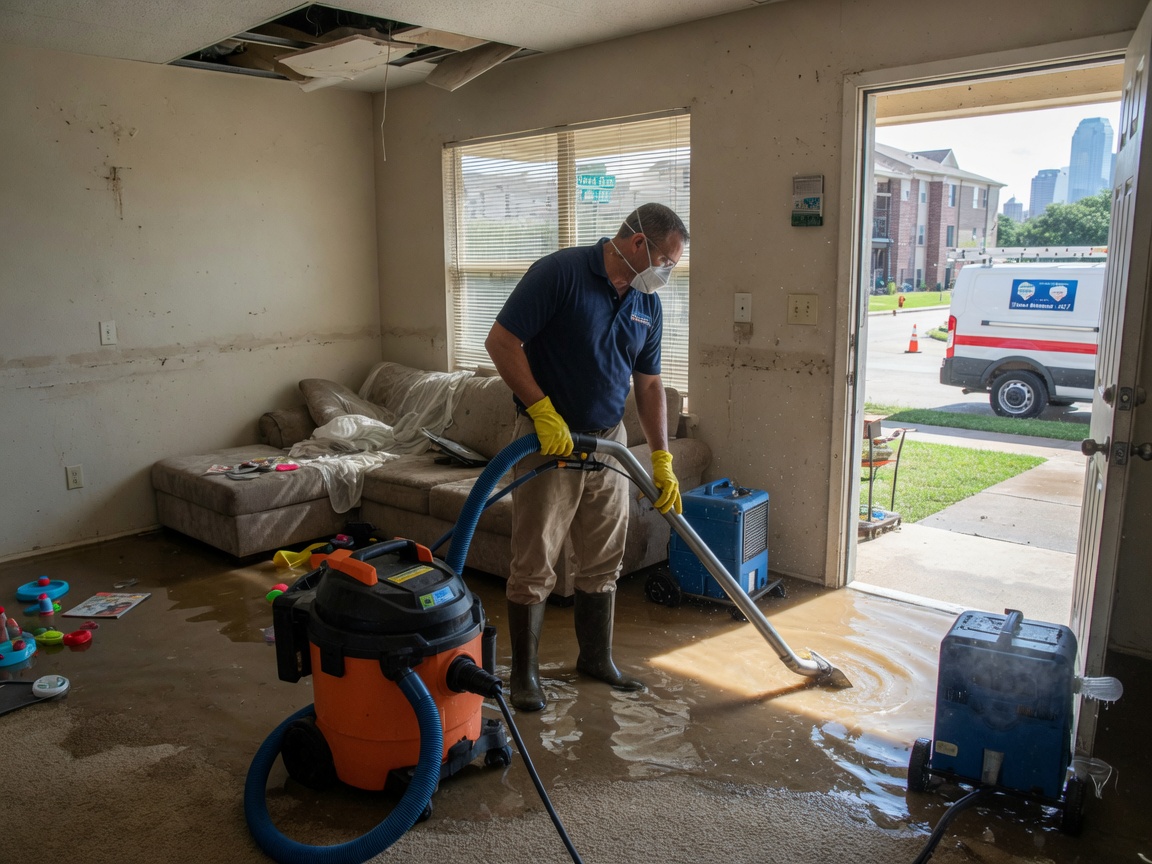
Dallas sits in a humid subtropical climate where hot summers and occasional heavy rains push moisture deep into older homes in East Dallas and Deep Ellum. Many properties built before 1970 have plaster walls and slab foundations that trap water along the perimeter once flooding occurs from roof leaks or appliance failures. Extraction must account for the clay-heavy soil that slows natural drainage around foundations in Lake Highlands and North Dallas.
Technicians start by mapping moisture with meters to locate hidden pockets behind baseboards and under hardwood floors common in Bishop Arts District and Oak Lawn bungalows. Standing water removal uses truck-mounted pumps rated for 200-plus gallons per minute followed by submersible units for tight crawl spaces. In Uptown high-rises, limited elevator access and shared walls require careful containment to prevent migration into neighboring units.
After bulk removal, crews focus on carpet pad extraction and hardwood cupping prevention, especially after storms that affect multiple blocks near Klyde Warren Park. Debris from nearby construction sites in Downtown Dallas can clog floor drains, extending the time needed to clear water from commercial basements. All work follows Dallas building code requirements for ventilation and disposal of contaminated materials.
Technician insight
In Dallas, the thing that catches most people out with water removal is how quickly humidity from our subtropical summers re-soaks slab edges and plaster in pre-1970 homes around East Dallas and Deep Ellum. Clay soil keeps moisture against foundations longer than people expect, so skipping perimeter checks after the first pump-out often leads to hidden mold weeks later.
Uptown Condo Leak
A washing machine supply line burst on the second floor of a 2000s building near Klyde Warren Park. Water migrated through the slab edge into the unit below. Crews extracted 180 gallons from both units, removed saturated carpet pads, and confirmed dryness along the shared wall before leaving the site.
Water Removal Services Services We Offer
✓Emergency Water Extraction
Rapid removal of standing water from sudden leaks or storms using portable and truck-mounted pumps to limit damage in Downtown Dallas and Uptown high-rises.
✓Basement Water Removal
Targeted pumping and debris clearance from below-grade spaces common in older East Dallas and Lake Highlands homes where clay soil holds moisture against foundations.
✓Sewage Backup Extraction
Safe removal and disposal of contaminated water from backups, protecting living areas in Deep Ellum and Bishop Arts District properties with aging sewer lines.
✓Appliance Leak Water Removal
Extraction around refrigerators, washers, and water heaters that fail in North Dallas apartments and Oak Lawn condos, preventing spread into subfloors.
✓Roof Leak Water Extraction
Removal of rainwater that enters through damaged roofs, focusing on attic and ceiling cavities in historic structures near Dealey Plaza and Reunion Tower.
Water Removal Services Cost in Dallas, TX
| Service | Typical Range | What Affects It |
|---|---|---|
| Standard Residential Extraction | $250–$650 | Varies by room count and water depth in single-family homes |
| Basement or Crawl Space Removal | $400–$900 | Higher when debris or limited access is present |
| Sewage or Contaminated Water Extraction | $600–$1,400 | Includes biohazard handling and disposal fees |
| Commercial Space Water Removal | $500–$1,200 | Depends on square footage and business interruption needs |
Ranges are typical for Dallas, TX and confirmed with an exact written quote before any work starts.
How it works
- 1
On-Site Assessment
Technicians inspect the property, measure moisture levels, and identify affected materials in Dallas homes and businesses.
- 2
Bulk Water Removal
Pumps extract standing water while containing the area to stop migration into unaffected rooms.
- 3
Hidden Moisture Extraction
Subfloor and wall cavities are addressed with specialized tools to pull remaining water from porous materials.
- 4
Final Clearance Check
Moisture readings confirm dryness before handing off to drying crews or the property owner.
Pricing
Costs depend on water volume, access difficulty, and contamination level; upfront quotes provided after inspection.